
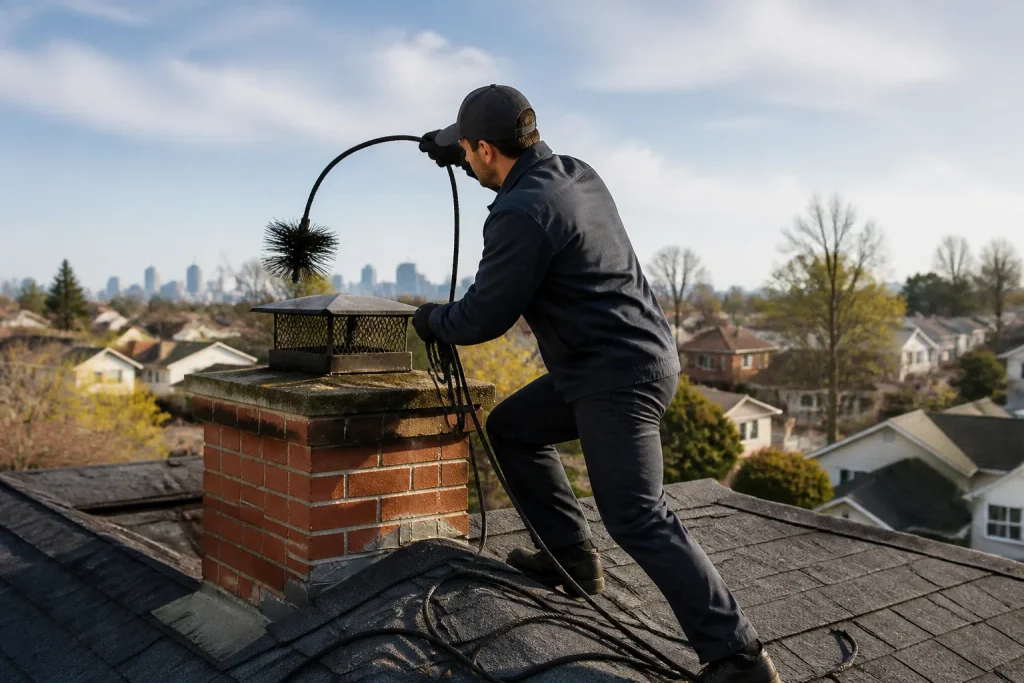
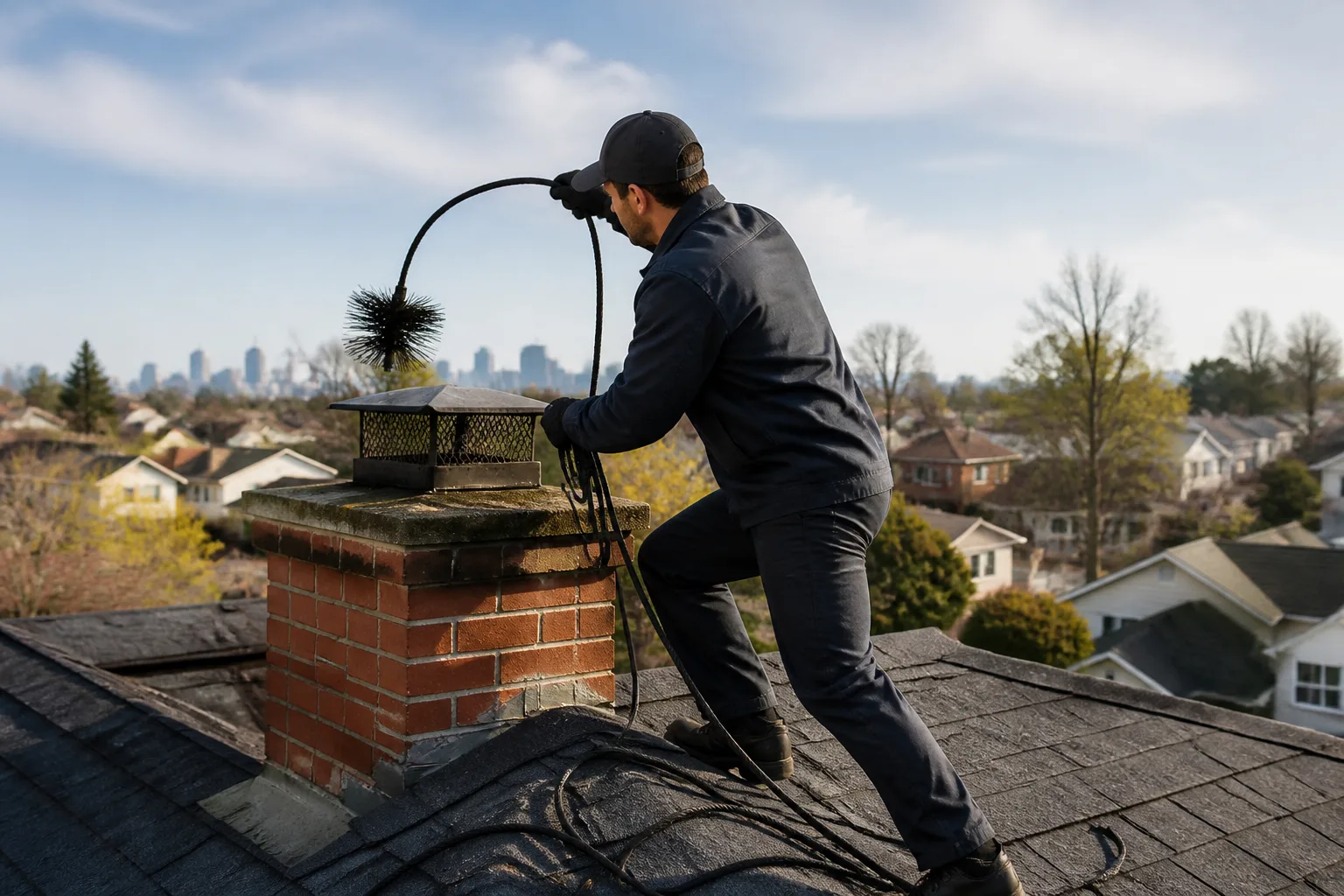
Emergency Chimney Sweep Near Me: What Central-Alameda Homeowners Should Do First
If you suspect a chimney fire, close the damper, close glass doors, shut off any fans or HVAC systems, get everyone out, and call 911 from outside the house. If what you’re dealing with is heavy smoke backing into the room or a carbon monoxide alarm, the order changes: evacuate first, call the fire department or gas company, and only contact a chimney sweep once the immediate danger is cleared and the system is safe to assess. If you’d rather not handle the assessment yourself, call (866) 282-7014 and we’ll walk you through it.
The First 15 Minutes: What Actually Matters and What Doesn’t
Most Central-Alameda homeowners have never seen a chimney fire up close, and the signs are rarely what people expect. A chimney fire doesn’t always look like flames shooting out the top like a Roman candle. More often, it sounds like a freight train or loud rumbling inside the flue, or it shows up as thick, dark smoke, or a hot, acrid smell that won’t clear even with the damper closed. Sometimes the only clue is chunks of creosote raining down into the firebox.
Here’s the sequence that keeps a bad situation from becoming a structure fire:
- Close the damper if you can do it safely. Cutting off oxygen to the fire inside the flue slows combustion. If the fire has already spread to the chimney chase or attic, skip this step and get out.
- Close glass fireplace doors. This contains sparks and embers that might pop out into the living space.
- Do not open windows or doors near the fireplace. It feels counterintuitive, but fresh air feeds the fire. You want to starve it, not vent it.
- Turn off fans, the furnace, and any whole-house ventilation. Air movement creates pressure differences that can draw smoke into rooms instead of letting it rise up the flue.
- Call 911 from outside. Even a small chimney fire can smolder inside the flue structure for hours and re-ignite. The fire department in Central-Alameda and the surrounding East Bay responds quickly, and they’ll check for extension into the attic or walls.
We’ve responded to calls where homeowners told us they “waited it out” because the fire seemed to burn itself out in ten minutes. In several of those chimneys, the fire had cracked flue tiles and pushed heat into the framing behind the masonry. The fire department will tell you the same thing we do: once a chimney has burned, it’s no longer safe to use until it’s been professionally inspected. The Tidewater Chimney Sweep home page has more on how we approach those post-fire assessments.
Emergency vs. Urgent vs. Routine: When You Actually Need Same-Day Service
Not every chimney problem in Central-Alameda is an emergency, and calling a sweep at 2 a.m. for the wrong issue wastes your money and delays help for someone else. Here’s how we break it down when homeowners call us describing a problem.
True emergencies: act now
- Visible flames outside the chimney or coming from the flue opening. That’s an active structure fire. Call 911, not a chimney company.
- Any sign of a chimney fire that has just occurred, even if it appears to have stopped. Smoky smell that won’t clear, a roaring sound that died down, cracked flue tiles you can hear or see, or heat radiating from the chimney chase long after the fire should have gone out.
- Carbon monoxide alarm sounding while the fireplace, insert, or stove was in use. Evacuate immediately, call 911 or the gas company, and do not re-enter until the structure has been cleared. A chimney or venting problem can absolutely cause CO backup, but so can a furnace, water heater, or blocked dryer vent.
- Heavy smoke pouring into the living space with the damper open. This signals a blocked flue, whether it’s a collapsed flue tile, an animal nest, or severe creosote buildup. It’s a fire risk and a CO risk until someone gets a camera up there.
Urgent but not 911-urgent: same-week service
- A strong, persistent smoky smell when the fireplace is cold. This often means creosote is baking off inside a warm chimney, or you have a drafting issue. Worth scheduling fast, but not a fire-department call.
- Visible creosote flakes or large black deposits falling into the firebox. This is a heavy-buildup warning sign. You should stop using the fireplace and get it swept before the next burn.
- Water stains on the ceiling or walls around the chimney. A failed flashing or cracked crown lets water in, and water plus masonry equals accelerated deterioration. This can wait days, but not months.
Can wait 30 to 60 days if you stop using the fireplace
- Mild musty odor in summer. That’s typical in many Central-Alameda homes, especially older ones with unlined or clay-tile flues. Stop burning until it’s checked, but this is not a same-week issue.
- Small spalling or chipped brick on the exterior. Cosmetic until it’s not. A professional can tell you where it falls on that spectrum.
- Routine annual sweeping. If you didn’t burn much last season, a few weeks won’t matter. If you burned wet wood or pine, move it up.
For Central-Alameda homeowners who want a working fireplace ready for the cooler months, our Chimney Sweep in Central-Alameda service page covers the standard sweep, inspection, and what it includes.
Why You Should Never Use the Fireplace Again After a Chimney Fire (Until It’s Inspected)
This is the part homeowners get wrong most often. The visual check tells you almost nothing after a chimney fire. The damage happens where you can’t see: inside the flue, behind the firebox, in the space between the masonry and the framing.
A Level 2 inspection is what matters after a chimney fire, and it’s the only professional standard that can clear the system for use again. Here’s what we’re looking for that a flashlight-from-the-roof won’t catch:
- Cracked or shifted flue tiles that open gaps where heat and gases can escape into the house structure
- Creosote expansion that pushes flue walls outward and compromises the liner
- Heat damage to the chimney chase, attic insulation, or nearby framing that could smolder or ignite later
- Mortar joints that have opened from thermal shock, not just from age
- Damage to the chimney cap, crown, or spark arrestor that lets water and animals in after the fire compromised the top
We run a camera up the flue on every post-fire inspection because our eyes can’t reach most of what we need to see. A chimney in Central-Alameda can look perfectly fine from the hearth while the flue liner above the smoke shelf is cracked in six places. If the inspection shows liner damage, products like HeatShield or a new DuraFlex liner are how we restore the chimney to safe working condition, but that’s a conversation for after we know what we’re dealing with. The Chimney Repair in Central-Alameda page goes into the repair side in more detail.
What a Legitimate Emergency Chimney Company Will Tell You (vs. Upsell Red Flags)
Emergency calls bring out the worst in some companies. When a homeowner is scared and the chimney just caught fire, the pressure to sign off on expensive work is real. We’ve lost bids to companies that scared people into full rebuilds they didn’t need, and we’ve won trust from homeowners who called us for a second opinion after a panic quote.
Here’s what a reputable chimney company will do and say when they arrive at an emergency call in Central-Alameda:
What you should hear:
- “Let me run the camera up before I recommend anything.” Every legitimate repair recommendation starts with visual evidence you can see with your own eyes.
- “Here’s what can wait, and here’s what can’t.” An honest sweep will tell you when a repair can safely be staged for next season versus when it must happen before another fire burns.
- “You don’t need a new liner yet” when that’s true. If the camera shows a hairline crack in one tile and the rest of the flue is sound, the right answer is often monitoring, not replacement.
- A written report with photos of what was found. If they won’t show you pictures, ask why.
Red flags that should make you pause:
- Quote given before any inspection or after a “visual check” that took two minutes and involved no camera
- Pressure to replace the entire chimney or rebuild the firebox without showing you why
- Claims that everything is dangerous and nothing can wait, especially if they can start “today if you sign now”
- A price that drops dramatically when you hesitate
We keep professional-grade materials on the truck because we know what Central-Alameda chimneys look like after decades of use, but that doesn’t mean we use them on every call. A Gelco cap or a Copperfield chase cover is only recommended when the existing one is actually failing. Anything else is noise.
How Tidewater Handles Emergency Calls in Central-Alameda
When you call us with a suspected chimney fire or a heavy smoke problem, the first conversation is about safety. We’ll ask what you’re seeing, smelling, and hearing. If we think you should call the fire department first, we’ll tell you that directly. We’re not going to schedule a sweep while your chimney is actively burning.
Once the immediate danger is handled, here’s what our process looks like:
- Same-day or next-day assessment when the situation calls for it. We run the camera, inspect the flue from top to bottom, and give you a written report with photos of exactly what we found.
- Clear guidance on whether you can burn again. If the chimney needs work before it’s safe, we’ll tell you plainly. If it’s safe with conditions, we’ll give you those conditions in writing.
- Staged repairs when safe. Some post-fire repairs, like replacing a chimney cap or addressing a cracked crown, can be scheduled without putting your home at risk. Others, like a compromised liner, need attention before the next fire. We’ll tell you which is which.
- The right materials for the actual problem. If a liner needs repair or replacement, we use systems like HeatShield or DuraFlex because those are what the professional supply chain specifies, not what the hardware store stocks. If the issue is a chase top or cap, we carry Olympia Chimney and Copperfield for the same reason.
We also handle chimney and dryer vent maintenance for Central-Alameda homeowners who want both fire hazards addressed by the same specialist. It’s one less relationship to manage, and if your Dryer Vent Cleaning in Central-Alameda has been neglected, it’s worth getting it checked alongside your chimney. Lint fires and chimney fires are the two most common home-heating fire calls we see in the area.
The Bottom Line
Every chimney emergency in Central-Alameda follows the same basic order: eliminate the active hazard first, get professional eyes on the system second, and don’t burn again until someone with a camera and the right training has cleared the chimney. A chimney fire changes the structure of your flue even when it looks fine from the outside, and the only way to know what you’re dealing with is a proper Level 2 inspection with photos you can actually see.
If you’re in Central-Alameda and need help, Tidewater Chimney Sweep offers free estimates. Call (866) 282-7014, and we’ll help you sort out whether this is a true emergency or something that can wait until we can get a camera up the flue.
Frequently Asked Questions
Emergency chimney service in Central-Alameda typically runs $200 to $450 for the assessment and sweep, depending on the chimney’s condition and whether a post-fire Level 2 camera inspection is required. Post-fire inspections cost more than routine sweeps because we’re documenting damage, not just cleaning creosote. Repair costs depend entirely on what the camera shows, and we’ll show you the evidence before we quote anything. Call (866) 282-7014 for an exact quote based on what you’re dealing with.
Not always. A chimney fire can crack flue tiles and compromise the liner, but the severity varies widely. Some liners need full replacement with a system like DuraFlex, some can be restored with HeatShield resurfacing, and some survive with only minor cosmetic damage that requires monitoring. The only way to know is a camera inspection that shows the actual condition of the flue walls. Anyone recommending a liner without showing you that footage should be treated with caution.
The industry standard is annual sweeping, but in Central-Alameda it depends on how much you burn, what you burn, and whether it’s a wood-burning fireplace, insert, or stove. Homes that burn mostly seasoned hardwood and use the fireplace a few times a week through the winter can often go 10 to 12 months between sweeps. Homes that burn wet wood, pine, or firepit-style logs, or that use the fireplace heavily, may need sweeping twice per year. If you notice a strong smoky smell when the fireplace is cold, or creosote flakes falling into the firebox, move the sweep up regardless of the calendar.
Creosote builds up on the flue walls. Creosote is unburned wood tar, and it’s the fuel for chimney fires. The more creosote, the larger the fire. In a neglected chimney, a chimney fire can reach 2,000 degrees and crack flue tiles, warp liners, and transfer heat into the house framing. Even without a fire, heavy buildup restricts drafting, which pushes smoke and carbon monoxide into the living space. A blocked or heavily built-up chimney is a fire and CO hazard until it’s cleaned. If you’re behind on maintenance in Central-Alameda, schedule the sweep before the next burn.
Written by the team at Tidewater Chimney Sweep, serving Central-Alameda since 2012.
Need Chimney Cleaning Help?
Call Tidewater Chimney Sweep - licensed & insured, with free written estimates in Central-Alameda.
(866) 282-7014